
MEPF LOD 400 BIM Delivered for a 340,000 sq. ft. University Building
Introduction


Key Challenges
-
Coordinating extensive MEPF systems across six floors of a large academic building required high attention to detail and accuracy.
-
Several mechanical components and fittings did not have readily available families in Revit and required custom modeling as per manufacturer specifications.
-
Limited initial coordination between MEP, architecture, and structure meant numerous clashes were detected in early model versions.
-
Ensuring ceiling-based services were modeled at accurate levels without impacting aesthetics or architectural clearances added complexity.
Approaches and Solutions
-
Gsource used project specifications and product cutsheets to create and update Revit families tailored to the exact project requirements.
-
Ceiling-based MEPF components were modeled with precise level references to optimize spatial planning and avoid conflicts.
-
Weekly coordination meetings were held with the client’s design team to resolve issues collaboratively and ensure alignment.
-
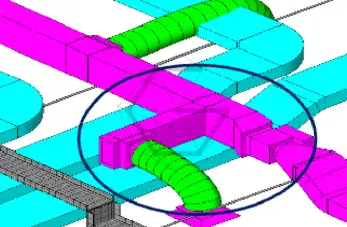
Advanced clash detection and resolution were performed using Navisworks to achieve a fully clash-free model.
-
Final deliverables included the LOD 400 BIM model, detailed shop drawings, and a comprehensive clash detection report.
Final Outcome
The project was delivered as a fully coordinated LOD 400 MEPF Revit model with shop drawings, ready for on-site implementation, reducing rework and delays.
Client Overview
The client was a leading U.S. university planning a state-of-the-art educational facility expansion.

Pavan Mulik is the Vice President of Operations at Gsource Technologies and also serves as Account Manager for Structural and Mechanical Design. With extensive expertise in civil engineering, land surveying, and BIM, he excels at managing complex workflows and driving cross-functional collaboration. His strategic approach ensures smooth project execution at any scale. Outside work, he enjoys exploring landscapes and architectural marvels for inspiration.
Related Case Studies

(Enter captcha image text in box)