Clash Detection Explained: How BIM Prevents On-Site Issues


Table of Contents:
1. Clash Detection in BIM – An Overview
2. What Clash Detection Really Means
3. The Real Cost of Missed Clashes
4. Clash Detection in Action: How BIM Solves It
5. In Which Ways Does BIM Prevent On-Site Problems?
6. Clash Detection Tools vs. Human Expertise
7. Best Practices for Effective Clash Detection in BIM
8. Conclusion
1. Clash Detection in BIM – An Overview
On construction sites, it’s nothing new for work to suddenly grind to a halt because ductwork is clashing with a beam. Or perhaps, a plumbing line is overlapping with electrical conduits. Then follow the flares in tempers, stretching of deadlines, and the beginning of blame games. What was supposed to be smooth progress turns into costly rework, wasted materials, and frustrated teams.
But these clashes aren’t a surprise- they’re the result of coordination issues between design elements prior to kicking off construction work. And let’s be honest, discovering them in the middle of the site is the worst time possible. Every contractor, project manager, and MEP team has faced this headache at some point.
That’s where clash detection in BIM changes the game. It’s not just about fancy software or digital models. It’s about catching problems before they increase, keeping your schedule intact, and saving your budget from unnecessary hits. Clash detection makes sure every trade works harmoniously, and ensures fewer disputes, smoother builds, and less stress.
2. What Clash Detection Really Means
Spotting problems before they reach the construction site- that’s what clash detection in BIM is all about. Instead of waiting for the walls to go up on site and realising that the duct is set to occupy the same space as the beam, there’s a simpler way to avoid this. Clash detection will help you identify and resolve conflicts in the digital model early on.

It’s basically a safety net that saves you from diving into costly surprises later.
You are likely to encounter three types of clashes:
- Hard clashes:
The obvious ones- a duct cutting across a beam, or a pipe clashing with a wall. These can’t be built and can absolutely bring work to a standstill if not identified and resolved early on.
- Soft clashes:
These clashes indicate the clearance issues. For instance, a pipe may fit on site, but if it leaves no room for insulation or maintenance access, then it can cause problems later on.
- Workflow clashes:
Clashes don’t have to be physical- at times, they’re faced in scheduling as well. In multi-trade construction, the same space may be required by different trades at the same time. This can cause delays and frustration on-site.
By spotting these clashes ahead of time, BIM coordination keeps projects on track, saves money, and helps teams work without stepping on each other’s toes.
Spot every clash early
Discover our Clash Detection service now3. The Real Cost of Missed Clashes
Clashes on-site aren’t just technical issues. They hit the heart of your project: time, money, and relationships. Anyone who has had to pause construction because a duct couldn’t pass a beam knows just how quickly things spiral. A seemingly small error in coordination can into major delays, cost overruns, and a lot of frustration for everyone involved.

Here’s what missed clashes really cost you:
- Lost time: Every time work has to stop for redesigns or rework, schedules slip. In many cases,
that means liquidated damages or penalties for late delivery. - Extra labor and materials: Fixing something on paper is cheap. Fixing it on-site means tearing
down, re-routing, and doubling the cost of manpower and materials. - Rework fatigue: Teams lose momentum and morale when they’re constantly undoing and redoing
work. That affects productivity across the board. - Damaged relationships: When clashes aren’t spotted early, it often turns into finger-pointing-
architects, engineers, contractors, and owners blaming each other. That tension can sour client trust and trade
relationships.
Simply put, every clash caught late is money and time lost. That’s why clash detection in BIM isn’t optional, but rather, a safeguard against the hidden costs that derail projects.
4. Clash Detection in Action: How BIM Solves It

Here’s the beauty of clash detection in BIM- it does not wait for problems to show up on-site. It catches them early when the solutions are quicker and much cheaper. Let’s say, you discover a duct that’s cutting through a structural BIM member in the design phase itself, instead of after the scaffolding’s up and the construction has begun. Early clash identification is where BIM majorly saves you the most time and stress.
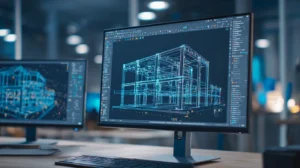
Another advantage is visualization. With BIM, you don’t just have to read 2D drawings but can actually see the building in 3D. So, if a pipe is running too close to an electrical conduit, anyone viewing the model can easily spot the issue. There is no guesswork or surprises; everything can be clearly seen, like having X-ray vision for your project.
BIM also generates automated clash reports. Conflicts aren’t just spotted, they’re tracked, assigned, and resolved systematically. This puts an end to endless back-and-forth emails or site debates; you have a clear record of what needs fixing and who’s responsible.
For existing buildings requiring renovation or retrofit, point cloud to BIM modelling provides the accurate as-built conditions necessary for effective clash detection.
In short, clash detection takes potential construction nightmares and transforms them into manageable tasks, even before they reach the site. Less rework and smoother collaboration- that’s the power of BIM in action.
5. In Which Ways Does BIM Prevent On-Site Problems?
On real-world construction sites, BIM is revolutionizing the way teams are coordinating and working. Here are a few ways in which BIM is helping multiple trades actively avoid on-site issues.
- Saves Money by Reducing Rework
Imagine finishing duct installation on-site only to realize that it clashes with a structural or Architectural BIM member. You’re forced to tear it out and start again. BIM catches all of these issues digitally. The result? Thousands saved in labour and materials.
- Keeps Projects on Schedule
When multiple trades are involved, one trade often has to wait around on-site for another to finish its job. By linking design to scheduling, BIM ensures that the trades are properly sequenced, and no one is left idle.
- Enhances Collaboration Between Trades
One thing that commonly happens when systems collide on-site is finger-pointing. However, a shared BIM model can help multiple trades view each other’s scope clearly. It eliminates disputes and creates a smoother workflow.
- Improves Safety by Avoiding On-Site Confusion
Last-minute rerouting and crowding can lead to unsafe site conditions. BIM guides workers and teams on exactly where to work. This significantly reduces the risk of accidents.
- Ensures Client Satisfaction
Mistakes and rework expenses frustrate clients more than poor finishes. BIM ensures accuracy right from the start of the project. It leads to stronger builds, cleaner installations, and happier clients who trust your delivery.
6. Clash Detection Tools vs. Human Expertise
BIM clash detection software is excellent at scanning models and flagging conflicts, but relying on tools alone often leaves teams with long lists of issues and no clear solution. That’s where human expertise steps in. Skilled BIM professionals understand how to filter, prioritize, and resolve clashes in ways that align with both design intent and on-site construction realities.
Here’s why BIM clash detection services are crucial:
- Contextual judgment: Not every clash flagged by software is critical; experts know which ones truly impact construction.
- Design + site knowledge: Skilled BIM teams bridge the gap between drawings and field conditions.
- Actionable solutions: Instead of just listing clashes, construction professionals suggest practical resolutions.
- Smarter outsourcing: Partnering with specialists like Gsource means fewer delays, smoother collaboration, and faster project execution.
The best results come from combining the efficiency of tools with the insight of human expertise. At Gsource Technologies, expert MEPF BIM teams actively work on identifying and eliminating clashes in the BIM
models of varying complexities.
7. Best Practices for Effective Clash Detection in BIM
Clash detection should never be an afterthought but a part of your project culture. By putting a few simple practices in place, contractors and project managers can catch problems early, save money, and keep teams on the same page.

- Start Early:
Run clash detection during the design stage, not just before construction, to spot problems when they’re cheapest to fix.
- Standardize Inputs:
Keep file formats, levels of detail (LOD), and modeling standards consistent across all trades to avoid unnecessary mismatches.
- Define a BEP:
A clear BIM Execution Plan sets expectations, roles, and processes from the start.
- Use the Cloud:
Cloud-based collaboration tools ensure everyone is working off the latest model version, cutting down on confusion.
- Close the Loop:
Hold regular coordination meetings to review clashes, assign accountability, and track construction clash resolutions.
Apply these BIM rules in your project
8. Conclusion
At the end of the day, clash detection in BIM isn’t just about spotting mistakes. It’s about building smarter and coordinating effectively. By catching conflicts early, teams avoid rework, prevent disputes, and deliver projects with fewer delays. BIM clash detection isn’t an extra cost but is an investment that pays off in smoother execution, stronger collaboration, and happier clients.
If you’re ready to take the guesswork out of BIM coordination, contact our experts at Gsource. With our expert BIM clash detection services, your team can focus on building while we make sure the path ahead is clear.
FAQs
What is clash detection in BIM and why is it important?
Clash detection in BIM identifies conflicts between building systems, like HVAC ducts overlapping beams, before construction begins. It’s important because resolving issues digitally is far cheaper and faster than fixing them on-site.
How do BIM clash detection services reduce construction rework costs?
By spotting clashes early in the design stage, BIM reduces the need for costly rework during installation. This saves both time and money while keeping projects within budget.
What are the benefits of automated clash detection reports in BIM?
Automated clash detection reports provide a clear record of conflicts, responsibilities, and solutions. They help project managers track progress and ensure issues are resolved systematically.
Why should contractors outsource BIM clash detection services?
Outsourcing BIM clash detection services gives access to experts who understand both design and construction realities. Skilled teams can interpret clashes better than software alone, ensuring practical solutions for smooth project delivery.
Hitesh Wani is a BIM Specialist at Gsource Technologies, bringing extensive experience in permitting, documentation, and the comprehensive BIM process. Hitesh excels in combining creativity with precision to deliver exceptional results. Passionate about project planning and execution, he consistently employs out-of-the-box thinking to tackle challenges and drive innovation. In his free time, Hitesh explores emerging BIM trends and studies complex architectural case studies to uncover hidden patterns in every architectural challenge .
Read More