Tag: BIM technology

Success Story: Multi-trade BIM Coordination
The construction of high-rise buildings is a complex balancing act where multiple trades come together to create a safe, functional, and efficient structure. When even one piece of the puzzle is misaligned, the consequences can ripple across the entire project, causing rework, delays, and budget overruns. This is where multi-trade BIM coordination proves its value, ensuring that architecture, structure, and MEPF (Mechanical, Electrical, Plumbing, and Firefighting) systems all work in harmony.



How to Implement a BIM Coordination Process in Your Project
Delays and endless rework are constant causes of frustration on construction sites for contractors, engineers, and project managers. These challenges consume time and budgets and strain relationships between teams. Not to mention, they cause clients to question your reliability.

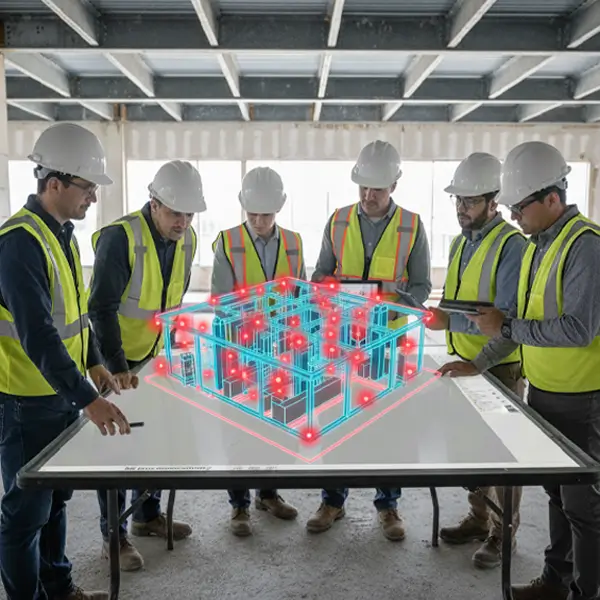
Clash Detection Explained: How BIM Prevents On-Site Issues
On construction sites, it’s nothing new for work to suddenly grind to a halt because ductwork is clashing with a beam. Or perhaps, a plumbing line is overlapping with electrical conduits. Then follow the flares in tempers, stretching of deadlines, and the beginning of blame games. What was supposed to be smooth progress turns into costly rework, wasted materials, and frustrated teams.


How Scan to BIM Creates actionable data models
In today’s rapidly digitizing construction and renovation industry, accuracy and data-driven decision-making are essential for success. That’s where Scan to BIM (Building Information Modeling) comes into play. This powerful process transforms existing physical spaces into detailed, intelligent 3D models that provide actionable data throughout a building’s lifecycle.


Top 8 Benefits of Outsourcing BIM for Construction Companies
Construction is a complex and detail-oriented process. Whether you planning to build a cozy home or a towering commercial complex, every project demands the creation of multiple technical drawings—each focusing on a specific discipline of construction. For example, MEPF drawings detail mechanical, electrical, plumbing, and fire protection systems, while architectural and structural drawings focus on design and support elements.

CAD vs BIM: Key Differences & Impact on Modern Design
In the fast-evolving world of architecture, engineering & construction, choosing the right technology is crucial for project success. The CAD vs BIM difference is a major consideration for professionals aiming to enhance efficiency, precision & collaboration. While CAD (Computer-Aided Design) has been a long-standing industry standard, BIM (Building Information Modeling) is transforming workflows with data-driven, real-time collaboration. In this blog, we’ll explore BIM vs CAD, their key differences & why the industry is shifting towards BIM for smarter, more efficient designs.

Leveraging BIM for Efficient Clash Detection in Construction
A clash is an instance in design where two components compete for the same space or where the functioning of one component requires space where another element interferes. In architecture, different disciplines work together on various models required for a building, including structural, mechanical, electrical, landscape, and MEP. These models are designed separately and then combined.


BIM Outsourcing vs. In-House: The Smart Choice for the AEC Industry
The construction industry is evolving rapidly, with technology playing a crucial role in shaping its future. One such game-changing innovation is Building Information Modeling (BIM). But for architecture, engineering, and construction (AEC) firms, the big question remains: Should BIM be handled in-house, or should it be outsourced? In this article, we will explore the advantages, challenges, and best practices of BIM outsourcing and compare it with in-house BIM teams, helping you determine the best approach for your business.

9 Trends in BIM that Will Shape the Future of the AEC Industry
The year 2021 became the year of automation, with AI becoming ubiquitous. Not only did the tech industry see the rise of AI, IoT, and blockchain, but it seeped into all the major industries, including construction and architecture.

BIM Standards: A Comprehensive Guide to Global Frameworks
BIM Standards play a critical role in ensuring seamless collaboration and efficiency in the fast-evolving architecture, engineering, and construction (AEC) industry. These guidelines provide a structured approach to Building Information Modeling (BIM), fostering uniformity in data exchange and project execution. Whether you're an architect, engineer, or contractor, understanding BIM standards is crucial for successful project outcomes. This guide explores what BIM standards are, their importance & how they are implemented worldwide.