
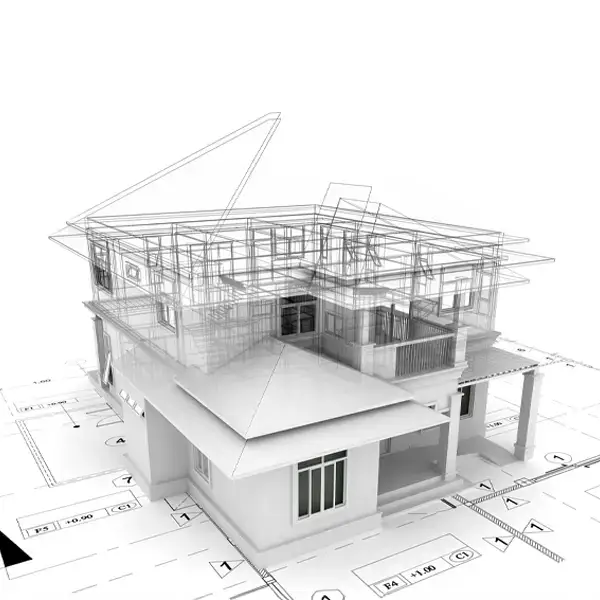
Build Better with Accurate, Standards-Aligned CAD Drafting
At Gsource, we transform your concepts, sketches, PDF or markups into precise, industry-standard CAD drawings that form the foundation for accurate design and construction.

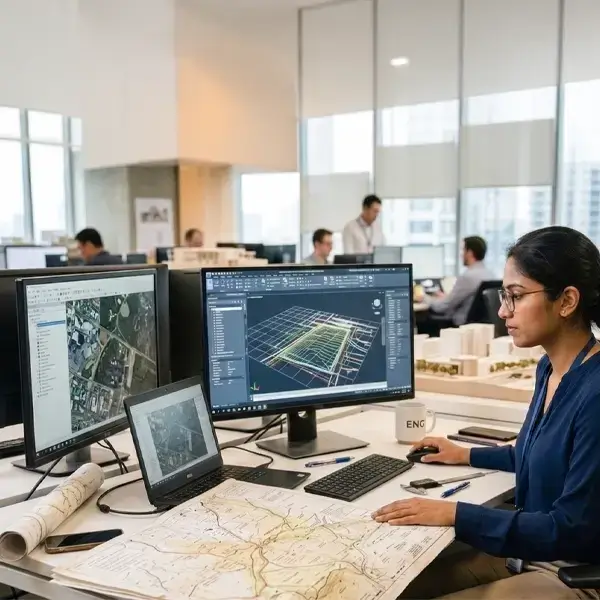
From Paper Map to Editable CAD: Benefits for Civil Engineers and Architects
Paper to CAD Conversion converts paper drawings, PDFs, or scans into accurate and editable CAD. This help civil engineers and architects.
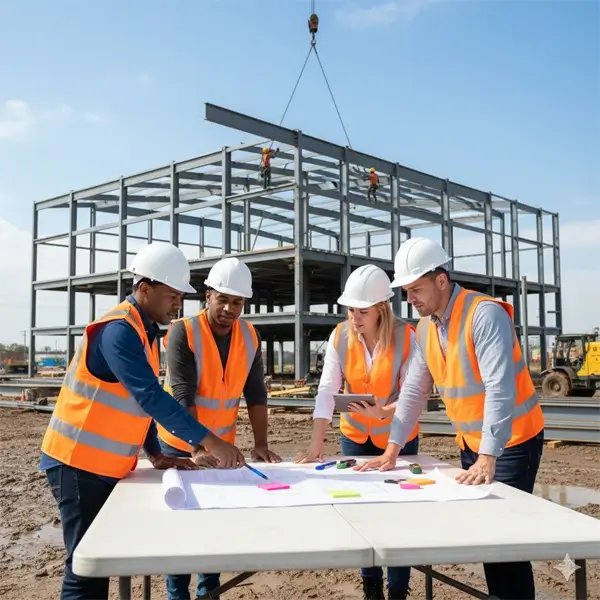
How Minor Errors in Steel Connection Details Lead to Major Delays
A missing dimension. A bolt callout that seems “obvious.” A connection that looks fine on screen. None of these raise red flags during design reviews.
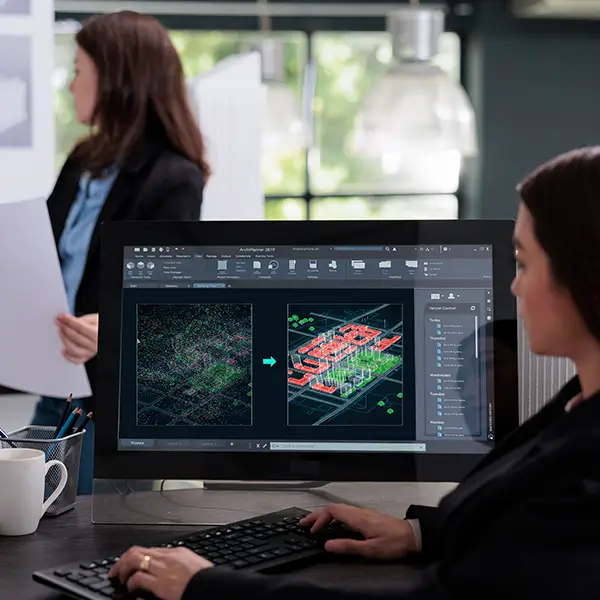
How LiDAR Point Cloud Processing Transforms Raw Scan Data into Accurate Maps
At first glance, LiDAR data looks like a chaotic cloud of dots with millions of points floating with no clear shape. But inside that raw scan is a highly accurate picture of real land. With LiDAR point cloud processing, scattered points are properly cleaned, classified, and refined, and exact replicas of buildings, grounds, and terrain are found.

Why Structural Steel Projects Fail Despite ‘Approved’ Drawings
The structural steel drawings are stamped “Approved.” The design intent is clear. Everyone has signed off. And yet, once fabrication begins or steel starts going up on site, things unravel. Members don’t align. Connections don’t work. RFIs explode. Schedules slip. Costs climb.

Why BIM Coordination is Critical for Multi-Trade Construction Projects
Every contractor has been there: finding clashes too late, dealing with drawings that don’t match what’s actually on site, and watching trades get in each other’s way. These coordination problems are common in multi-trade projects, but they don’t have to be. Poor coordination can turn a construction job into a nightmare, especially when several trades are involved. Most general contractors, project managers, or MEP contractors can share a story about a project that went sideways because the teams weren’t working together.

Top Benefits of 3D Architectural Visualization
In the dynamic world of AEC, where every line drawn and structure imagined has real-world implications, 3D architectural visualization has become an indispensable tool. Gone are the days of relying solely on 2D sketches or blueprints. Today, 3D visualization offers immersive, realistic renderings that bridge the gap between concept and construction. Whether you're an architect, builder, interior designer, or real estate developer, the benefits of incorporating 3D models into your workflow are vast and transformative.

3D Architectural Visualization: Definition, History, Types & Workflow
In today's AEC (Architecture, Engineering, and Construction) industry, the need for effective communication and client engagement is higher than ever. Whether you're revising a design or presenting your portfolio, realistic 3D models have become the new standard.

How BIM MEP Services Improve Building Systems in Construction?
In the ever-evolving construction landscape, precision, efficiency, and sustainability are no longer optional—they are essential. One of the most transformative technologies driving this change is Building Information Modeling (BIM), particularly when applied to MEP (Mechanical, Electrical, and Plumbing) systems. BIM MEP services are revolutionizing how building systems are designed, coordinated, and maintained across the project lifecycle.

How to Choose the Right BIM Service Provider for Your Architecture Project
The adoption of Building Information Modeling (BIM) in the United States has seen significant growth across the Architecture, Engineering, and Construction (AEC) industry. As of 2023, approximately 74% of contractors, 67% of engineers, and 70% of architects utilize BIM in their projects. Notably, all prominent architecture firms and over one-third of small firms have integrated BIM into their billable work.

Hidden Marina: The First Step in THE LINE’s Visionary Future
THE LINE, an ambitious urban development within NEOM, is redefining the future of sustainable, high-tech living. This revolutionary linear city aims to be car-free, AI-driven, and eco-conscious, offering a model for future urban developments. The first phase of this groundbreaking project is Hidden Marina, a crucial segment setting the foundation for the entire city. Hidden Marina will showcase next-gen construction technology, smart city infrastructure, and cutting-edge urban planning. A key enabler of this vision is Building Information Modeling (BIM), which plays a central role in its planning, execution, and long-term management.