6 Common Grading Plan Mistakes That Can Delay Your Project

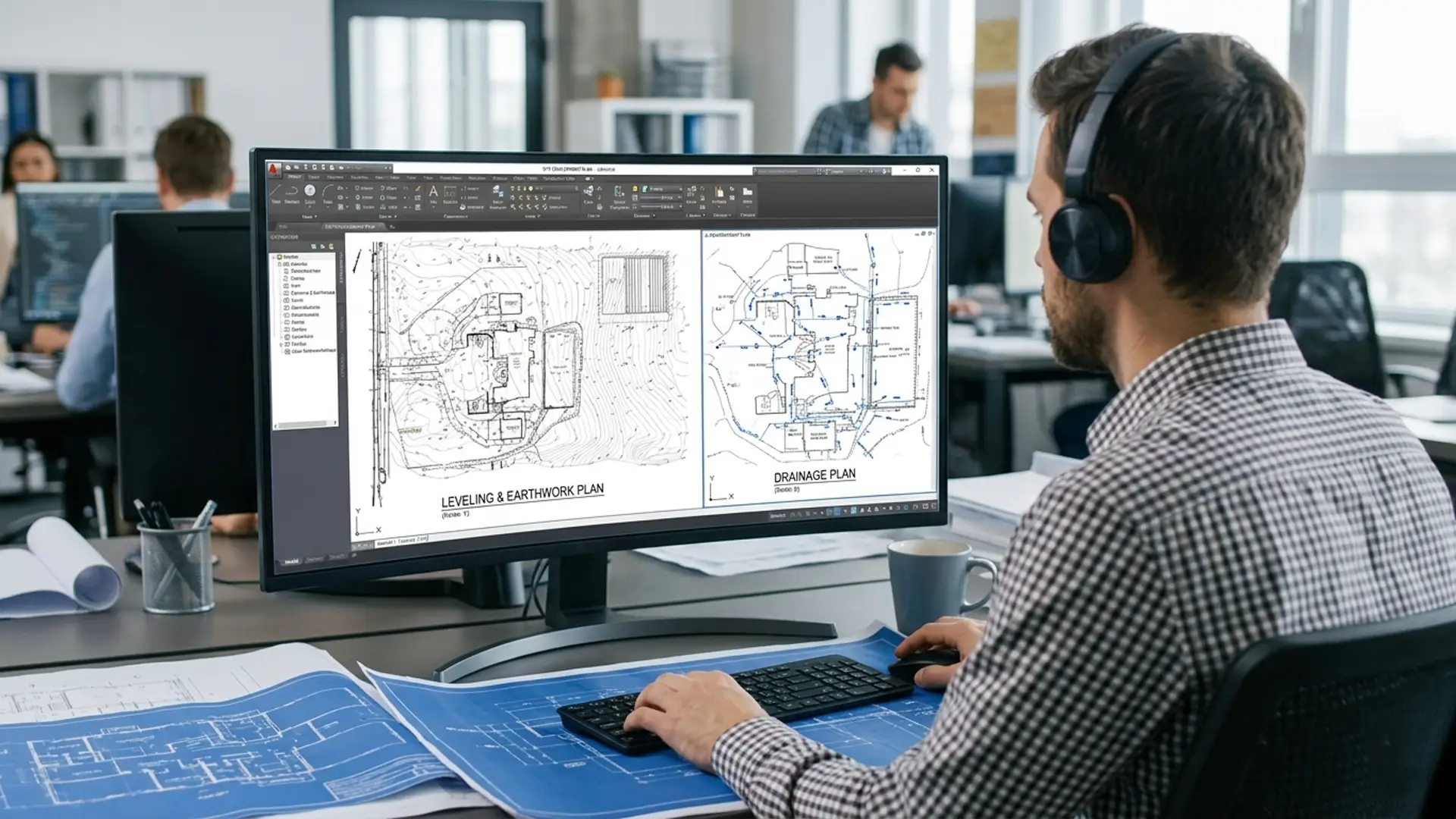
Table of Contents
Introduction
What is a Grading Plan?
6 Common Grading Plan Mistakes That Can Delay Your Project
Importance of Grading Plans in Land Development
Best Practices to Avoid Mistakes in Site Leveling Plan
Choose the Right Provider for Grading Plan
Conclusion
FAQs
Introduction
A grading plan isn’t just lines and elevations, but it helps to keep your entire project moving forward. Yet small grading errors can put your entire project on hold, result in failed approvals, and costly rework down the line. From drainage miscalculation to missing site details, these mistakes go unnoticed until it’s too late.
Here are 6 common grading plan errors that may quietly derail your timeline, and know what the best practices are to avoid them.
What is a Grading Plan?
A grading plan is a detailed engineering drawing that outlines how the construction site land is sculpted, showing both existing ground levels and the final designed elevations. This plan helps to prevent building damage due to stagnant water and erosion.
This ensures water moves away from the building foundation into the defined drainage system. The site leveling plan includes grades, elevation, contour, utility lines, and storm drainage features, which are important to designing new infrastructure projects.
6 Common Grading Plan Mistakes That Can Delay Your Project
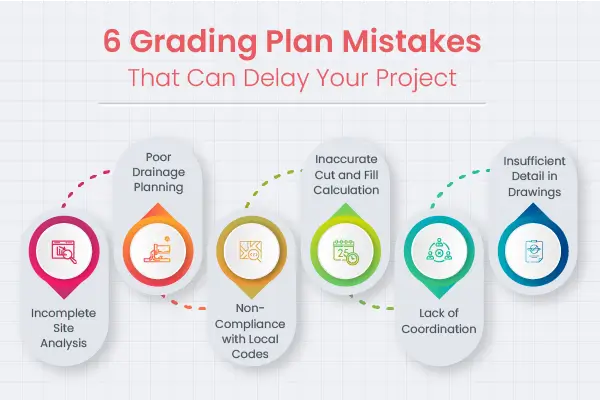
Grading plans are crucial in keeping land development projects on time and aligned across teams.
Have a clear understanding of key challenges to ensure smooth approval and execution.
-
Incomplete Site Analysis
Skipping detailed topographic surveys or existing conditions leads to inaccurate grading assumptions. This results in redesign during construction or permitting, causing avoidable delays and additional costs.
-
Poor Drainage Planning
Improper slope design or a lack of consideration of Stormwater flow can hamper regulatory approval. Revisions to the drainage system midway through the project can significantly result in slow approvals and disrupt construction sequencing.
-
Non-Compliance with Local Codes
Ignoring erosion control, municipal grading, or Stormwater regulation leads to permit denials. B2B projects also face strict scrutiny, and non-compliance can stall approvals for weeks or months.
-
Inaccurate Cut and Fill Calculation
Miscalculation in earthwork plan volumes impacts logistics, budgeting, and site balance. This creates conflicts during execution and forces last-minute adjustments that delay the project timelines.
-
Lack of Coordination with other Disciplines
Site leveling plans that are not aligned with roadways, utilities, or architectural designs lead to clashes. Resolving these conflicts during a later stage slows down both design finalization and construction.
-
Insufficient Detail in Construction Drawings
Missing spot elevations, vague annotations, and unclear contours create confusion for contractors. This results in rework, RFIs, and extended project schedules. Inconsistent labeling or lack of standardized drafting increases interpretation error on-site.
Importance of Grading Plans in Land Development
Here is the importance of accurate and precise grading plans that help in land development.
-
Foundation for Project Execution
Grading plans ensure design intent into buildable site conditions. They guide contractors on slopes, elevations, and earthwork to ensure projects move from design to construction without delays.
-
Critical for Regulatory Approvals
Well-prepared grading plans are important for securing permits from local authorities. Accurate drainage, slope, and erosion control details reduce the review cycle and prevent costly resubmission.
-
Optimize Earthwork and Cost Efficiency
Precise cut and fill calculations help to balance site materials and reduce hauling requirements. This also impacts project budgets and improves cost control for developers and contractors.
-
Ensure effective Stormwater management
Grading plans ensure water flow across the site and prevent flooding, erosion, and drainage failure. Proper planning reduces long-term maintenance risk and supports compliance with environmental standards.
-
Improve Construction Accuracy and Speed
Clear grading details reduce RFIs and misinterpretation on-site. This helps contractors execute work efficiently, which keeps timelines on track and minimizes delays.
Avoid costly rework and project delays
Get expert-reviewed grading plans from day one.
Best Practices to Avoid Mistakes in Site Leveling Plan
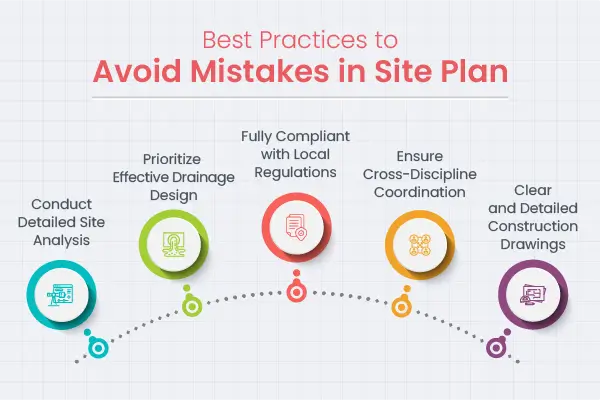
A well-structured site leveling plan is a foundation for accurate grading and smooth project execution.
The following are the best practices to help teams reduce revisions, delays, and overall design consistency.
-
Conduct Detailed Site Analysis
Analyze accurate topographic surveys, existing utility mapping, and soil data before grading begins. Early clarity reduces assumptions and ensures your grading strategy aligns with real site conditions.
-
Prioritize Effective Drainage Design
Design grading with proper slopes, runoff paths, and Stormwater management from the outset. Integrating drainage early helps to avoid water accumulation issues and regulatory compliance.
-
Fully Compliant with Local Regulations
Review municipal grading codes, erosion control, and Stormwater guidelines before finalizing the plans. Proactively aligning with local standards to prevent permit rejection and costly revisions.
-
Ensure Cross-Discipline Coordination
Collaborate closely with the utility, roadway, and architectural team throughout the design process. Coordinated planning avoids design conflicts and leads to faster approvals and smoother project execution.
-
Develop Clear and Detailed Construction Drawings
Clear documentation includes precise spot elevation, slopes, contour lines, and annotation in your grading plans. This reduces contractor confusion and limit RFIs during construction and helps to maintain project timelines and quality.
Choose the Right Provider for Grading Plan
Here are important factors to consider when selecting the right grading plan, which impact accuracy, approval timeline, and project efficiency:
-
Evaluate Technical Expertise and Experience
Select the provider with prior experience in land development and grading projects. Having strong technical knowledge ensures accurate slope design, drainage planning, and compliance with industry standards.
-
Assess Quality Control Processes
Look for firms that follow structured QA/QC workflows for grading plans and multi-level reviews. This helps to catch errors early and ensure consistent, high-quality deliverables.
-
Understanding of Local Regulations
The provider must be familiar with Stormwater guidelines, municipal codes, and permitting requirements like Gsource. This reduces approval delays and minimizes the need for revisions.
-
Review Coordination Capabilities
The reliable provider must collaborate with roadway, utility, and architectural teams. Strong coordination reduces design conflicts and supports smoother project execution.
-
Verify Use of Advanced Tools and Technology
Ensure the provider uses up-to-date CAD and civil design software for better precision and efficiency. Modern tools improve accuracy in earthwork calculation and overall plan quality.
Conclusion
A grading plan can make or break your project timeline. What seems like a small oversight on paper can quickly turn into approval delays, costly rework, and site confusion. The key is not just identifying these gaps but proactively addressing them for better planning, coordination, and quality control.
When grading plans are right, projects move faster, approval is easy, and the team stays focused on delivery instead of corrections.
FAQs
What is the most common issue in grading plans?
Incomplete site data is a common issue in grading plans, and without an accurate survey and existing condition, grading designs need revisions later.
Why are local regulations important in grading plans?
Local regulations are important in the drainage plan, as each municipality has specific grading and Stormwater rules. Ignoring them can result in permit denials and multiple resubmissions.
How does poor drainage planning delay a project?
Improper drainage design can lead to permit rejection or on-site water issues. This forces a redesign and slows down both approvals and construction.
How does lack of coordination impact grading plans?
When grading is not aligned with utilities or road design, contour map clashes occur. It’s important to fix these conflicts, as they later delay both the design and construction phases.
What happens if cut and fill calculations are wrong?
Inaccurate calculations affect the material balance and cost estimate. This can lead to budget overruns and delays during executions.
Why are detailed construction drawings critical?
Clear drawings with proper elevations and notes help contractors to execute accurately. Missing details lead to confusion, RFIs, and rework.
Can grading plans affect the project timeline directly?
Yes, grading plans affect the earthwork, approvals, and site readiness. Any error can slow down the entire project’s lifecycle.
Harshad Marne is a passionate civil engineering professional with a deep interest in 3D modeling, design, and land surveying. Proficient in tools like Civil 3D, Revit, ArcGIS, and OpenRoad, he enjoys creating detailed site plans, grading models, and digital terrain models (DTMs) to visualize and analyze infrastructure projects. Beyond the desk, Harshad finds inspiration in nature and iconic civil engineering marvels, exploring landscapes, bridges, dams, and geological formations firsthand.
Read More