The Complete Guide to Structural Steel Detailing for Fabricators

Table of Contents
What Is Structural Steel Detailing and Why It Matters to Fabricators
Key Components of Structural Steel Detailing Drawings
Common Challenges Fabricators Face Without Proper Structural Steel Detailing
How Quality Structural Steel Detailing Services Support Fabrication Success
Conclusion
FAQs
For fabricators, steel detailing is where design becomes reality. Every bolt, weld, and connection depends on precise, well-coordinated drawings. This guide walks through the essentials of structural steel detailing and why it matters at every fabrication stage.
What Is Structural Steel Detailing and Why It Matters to Fabricators
Any steel fabricator or structural engineer will agree- structural integrity begins with clarity. When everyone involved understands the fundamentals, steel detailing becomes more accurate, efficient, and buildable. So before diving deeper, let’s start with the basics.
Structural Steel Detailing in Simple Terms
To state it simply, structural steel detailing is about creating accurate drawings that steel fabricators rely on. These include detailed fabrication shop drawings used to fabricate, assemble, and erect steel structures on site. The drawings clearly show what needs to be built and how it should come together.
The Role of Steel Detailers in the Fabrication Workflow
A steel detailer acts as the link between architects and structural engineers on one side, and fabricators and contractors on the other. They translate design intent and engineering calculations into clear, easy-to-follow drawings that the site team can actually build from. This clarity is what helps steel structures get fabricated and erected safely and accurately.
Key Components of Structural Steel Detailing Drawings
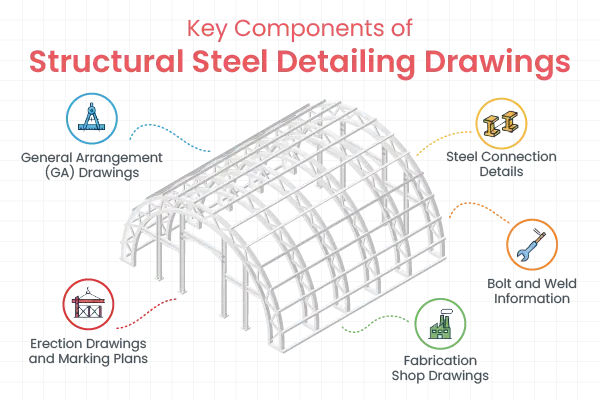
Steel detailing drawings turn design intent into build-ready information. Each component plays a role in keeping the fabrication and erection smooth. Here are the key components that make those steel fabrication drawings work on site.
General Arrangement (GA) Drawings
GA drawings show the overall steel framework- column locations, beam layouts, levels, and key dimensions. They help fabricators and site teams understand how the structure fits together before getting into details. Think of them as the big-picture roadmap that everyone refers to first.
Fabrication Shop Drawings
Fabrication shop drawings break each steel member down into exact, build-ready instructions. They include member sizes, lengths, hole locations, cuts, and markings. Fabricators rely on these drawings to manufacture steel accurately in the shop, ensuring everything fits correctly once it reaches site.
Steel Connection Details
Steel connection details explain how beams, columns, and braces are joined together. They show plates, angles, bolts, and welds clearly, leaving no room for guesswork. Good connection detailing ensures structural safety, faster fabrication, and fewer questions during erection, saving time for everyone involved.
Bolt and Weld Information
These details specify bolt grades, sizes, spacing, and weld types required at each connection. Clear bolt and weld information helps fabricators and site crews execute connections exactly as designed, reducing the risk of errors, rework, or site delays caused by unclear specifications.
Erection Drawings and Marking Plans
Erection drawings guide contractors on how to assemble steel on site. They show member marks, sequencing, and orientation, making installation smoother and safer. When done well, they help crews work faster, avoid confusion, and keep the structure aligned during erection.
Common Challenges Fabricators Face Without Proper Structural Steel Detailing
When steel detailing is rushed or incomplete, the impact is felt most on the fabrication floor and at site. What looks like a “small” drawing issue often turns into wasted material, lost time, and stressful back-and-forth between teams. Below are some of the most common problems fabricators face when proper steel detailing is missing.
Errors and Omissions in Steel Fabrication Drawings
Errors and omissions are one of the biggest pain points for fabricators. Missing dimensions, incorrect member sizes, unclear hole locations, or mismatched callouts force teams to stop and double-check assumptions. Even small mistakes can lead to steel being cut or drilled incorrectly, resulting in scrap or costly fixes. Fabricators may also receive drawings that don’t match the latest design revisions, creating confusion about what to fabricate.
Over time, these issues reduce productivity and increase frustration on the shop floor. Accurate, complete drawings help fabricators work confidently without second-guessing every detail.
Rework, RFIs, and Delays Caused by Poor Detailing
Poor detailing almost always leads to rework and RFIs. When drawings don’t clearly communicate how elements fit together, fabricators have no choice but to raise questions. Each RFI takes time to review, respond to, and implement, slowing down the entire project. In many cases, fabrication proceeds based on assumptions, only for errors to be discovered later during erection. This leads to rework, schedule slippage, and increased costs.
Delays at the steel stage often ripple across other trades, putting pressure on project timelines and relationships between teams. Common outcomes include:
- Increased RFIs
- Shop rework and remanufacturing
- Missed delivery and erection dates
Too many RFIs. Too much rework.
Get accurate, fabrication-ready steel detailing before your deadline.
Fabrication and Erection Issues Linked to Incomplete Connection Details
Connection details are critical to both fabrication and erection. When these details are missing, unclear, or incomplete, fabricators struggle to prepare members correctly, and site teams face alignment and fit-up issues. Incorrect bolt sizes, undefined weld requirements, or vague plate details can cause steel members to clash or not fit as intended.
This often results in site modifications, temporary fixes, or unsafe workarounds. Incomplete connection details also increase the risk of structural performance issues. Clear, buildable connection detailing ensures smoother fabrication, safer erection, and fewer surprises on site.
How Quality Structural Steel Detailing Services Support Fabrication Success
Quality structural steel detailing acts as the bridge between design intent and real-world fabrication. When detailing is done right, it brings engineers, detailers, and fabricators onto the same page early, reducing confusion, saving time, and avoiding costly surprises later. Here’s how strong detailing directly supports fabrication success.
Improving Coordination Between Engineers, Detailers, and Fabricators
Good detailing improves communication between all stakeholders involved in a steel project. Detailers translate engineering calculations and design intent into clear, practical drawings that fabricators can actually build from. When detailers collaborate closely with engineers, potential design issues are identified early.
At the same time, fabricator input helps ensure details are practical for shop equipment and site conditions. This shared understanding reduces misinterpretation, cuts down RFIs, and creates a smoother handoff between design and fabrication teams, keeping everyone aligned throughout the project.
Ensuring Buildability Through Clear and Accurate Shop Drawings
Clear shop drawings make fabrication predictable and efficient. Accurate dimensions, member marks, connection details, and material specifications allow fabricators to work confidently without stopping to ask questions. Well-detailed drawings also account for tolerances, sequencing, and erection requirements, reducing fit-up issues on site.
When shop drawings are complete and easy to follow, fabrication progresses faster, mistakes are minimized, and steel arrives on site ready to install. Simply put, buildable drawings turn complex designs into practical, executable instructions.
Reducing Risk and Cost Through Early Detailing Involvement
Involving detailers early in the project helps identify potential problems before they become expensive fixes. Early detailing highlights clashes, impractical connections, or fabrication challenges while changes are still easy and affordable to make.
This proactive approach reduces material waste, rework, and unexpected site modifications. It also improves cost certainty by aligning detailing, fabrication, and erection strategies from the start. By addressing risks upfront, quality detailing helps projects stay on schedule, within budget, and stress-free for fabrication teams.
Conclusion
Structural steel detailing may happen behind the scenes, but its impact on fabrication success is very real. Clear, accurate, and well-coordinated detailing drawings give fabricators the confidence to work efficiently, avoid costly mistakes, and deliver steel that fits right the first time. When detailing is treated as a critical part of the process- not an afterthought- it improves coordination, reduces rework, and keeps projects moving smoothly from shop to site.
As projects become more complex and timelines tighten, quality detailing plays an even bigger role in controlling risk and cost. Investing in experienced structural detailing support helps fabricators bridge the gap between design and construction, ensuring buildability at every stage. In the end, strong steel detailing isn’t just about drawings- it’s about enabling safer, faster, and more predictable fabrication outcomes that set the entire project up for success.
FAQs
What is structural steel detailing and why is it critical for fabricators?
Structural steel detailing translates engineering intent into fabrication-ready drawings. Accurate detailing ensures components fit correctly on site, reducing rework, delays, and material waste.
What information should a complete steel detailing drawing include?
A complete drawing covers member sizes, connection details, bolt and weld specifications, tolerances, and erection information. At Gsource, detailers ensure nothing essential is left open to interpretation.
How does poor steel detailing impact fabrication and erection?
Incomplete or unclear details often lead to RFIs, shop-floor confusion, and site modifications. These issues increase fabrication costs and disrupt erection sequences.
When should fabricators get steel detailers involved in a project?
Early involvement during design development helps identify buildability issues before fabrication begins. Teams working with experienced detailers like Gsource often see smoother coordination and fewer late-stage changes.
What software is commonly used for structural steel detailing?
Tools such as Tekla Structures, AutoCAD, and Advance Steel are widely used. Gsource leverages these platforms to deliver accurate, fabrication shop drawings and NC data.
How do quality steel detailing services reduce project risk?
Clear, coordinated drawings minimise errors, improve fit-up accuracy, and support predictable fabrication timelines. This reduces cost risk while helping fabricators meet delivery commitments with confidence.
Pavan Mulik is the Vice President of Operations at Gsource Technologies, bringing extensive expertise in civil engineering, land surveying, and BIM. A true all-rounder, Pawan is passionate about architecture and excels in managing complex workflows while fostering dynamic team collaboration. His strategic approach ensures the successful execution of projects, no matter the scale. When he’s not overseeing operations, Pawan enjoys exploring new landscapes and architectural marvels, drawing inspiration from the world around him.
Read More