Risk Mitigation in Property Line Verification Projects: What Professional Land Survey Drafting Brings to the Table

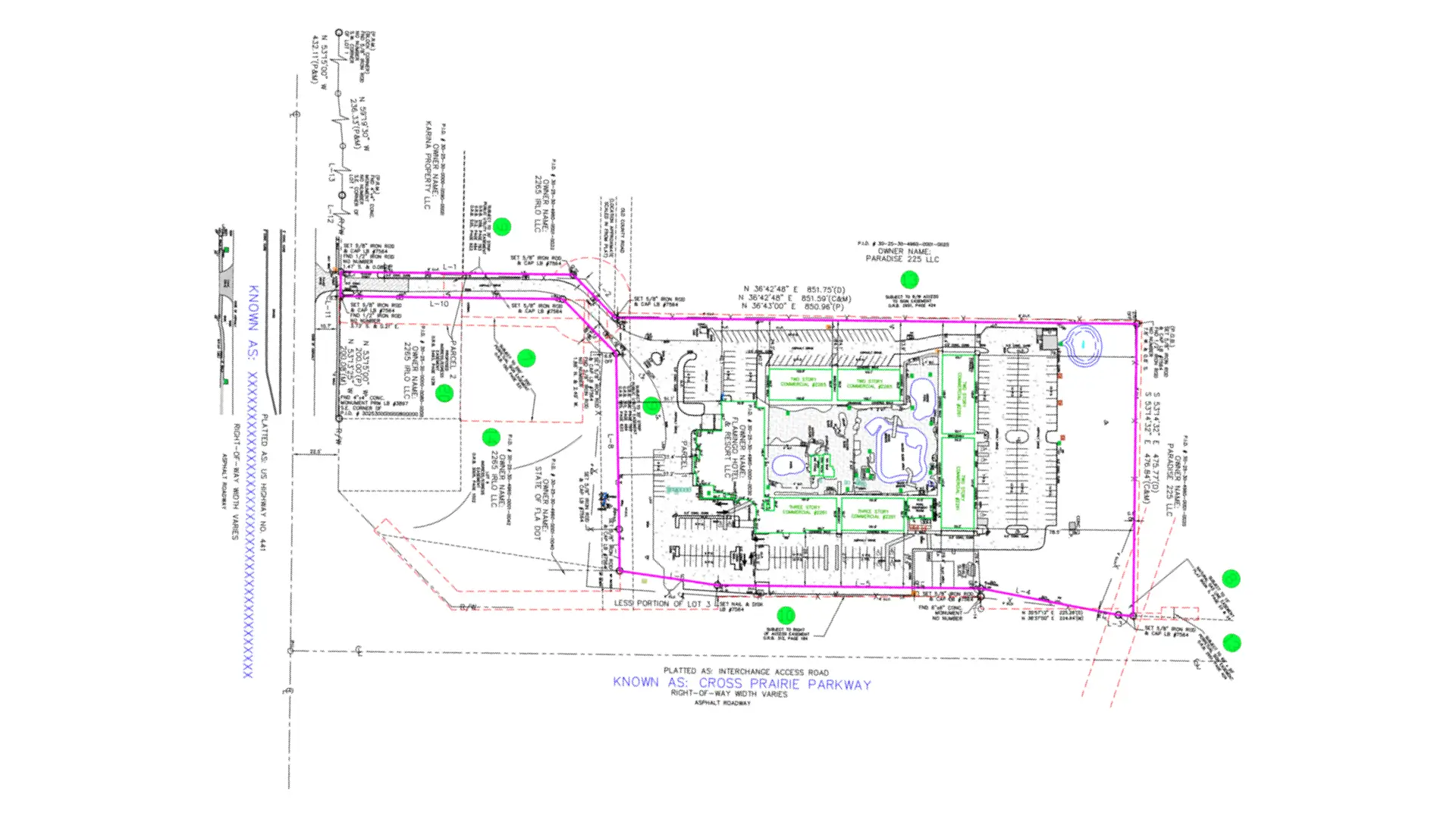
Table of Contents
Understanding Linear Infrastructure Projects
The Most Common Risks in Linear Infrastructure Projects
How Outsourcing Land Survey Drafting Reduces the Risk in Property Line Verification Projects
The Business Impact of Effective Risk Mitigation in Linear Infrastructure ProjectsConclusion
FAQs
The property line may look like a simple line on paper, but in reality, that’s where projects stall, disputes start, and budgets leak. One misread deed, misplaced boundary, or poorly drafted line can turn a routine verification into costly rework, a time-consuming legal back-and-forth, and a lengthy process. In property line verification, real risk does not just start in the field but at the drafting table.
That’s where outsourcing professional land survey drafting steps in, which reduces the risk of projects by turning complex boundary data into clear, reliable, and defensible property line documentation. They ensure survey drafting processes are precise, consistent, and standard-driven to avoid risk and rework related to the project.
In this blog, let’s explore how outsourcing survey drafting expertise reduces the risk of property line verification and much more.
Understanding Linear Infrastructure Projects
Linear infrastructure projects are large-scale development projects that extend long distances in a linear path. These projects are important for connecting different geographical points and facilitating efficient transportation and connectivity across regions.
Linear projects generally involve repetitive activities and sequential progression with defined routes, like highways, railways, and pipelines. The survey drafting teams need careful planning, design, and management to ensure continuous progress, resource flow, and quality consistently throughout their length.
The Most Common Risks in Linear Infrastructure Projects
Here is the most common risk faced by drafters in property line verification infrastructure projects.
Boundary and Right of Way (ROW) Conflicts
Linear projects go through multiple land parcels, which increases the risk of ownership disputes, missing easements, or encroachments. Even small boundary errors halt the construction and lead to legal delays.
Inaccurate or Incomplete Survey Data
Error in survey data directly impacts the design, planning, and construction decisions. Missing elevation details or outdated site information results in incorrect alignment and grading issues. Once the project starts, correcting these errors will be expensive and time-consuming.
Design Mismatch with Actual Site Condition
Linear infrastructure crosses varied utilities, terrain, and natural features, so if survey data do not fully reflect the real site’s condition, the design may clash with ground realities. This led to frequent revisions, RFIs, and construction slowdown.
Regulatory and Permitting Delays
Linear projects fall under multiple jurisdictions and regulatory bodies. If there are inconsistent or poorly documented survey drawings, this may slow down the approval, trigger resubmission, and delay permitting, which can push back the entire construction schedule.
Coordination Gap Between Project Teams
Survey, design, and construction teams generally work in silos on large linear projects. When survey data is not standardized or drafted, miscommunication increases, and a lack of coordination results in errors, rework, and decision-making delays.
How Outsourcing Land Survey Drafting Reduces the Risk in Property Line Verification Projects
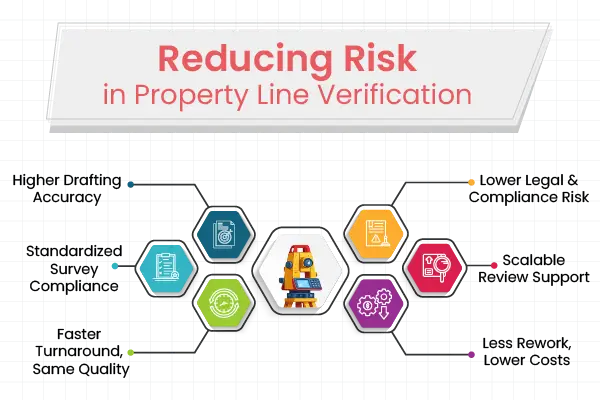
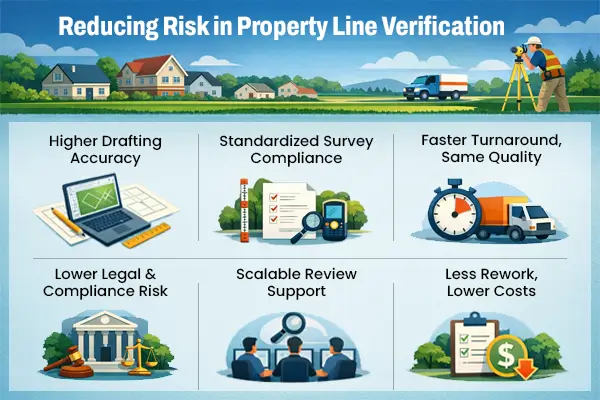
Explore critical points on how outsourcing land survey drafting solutions reduces the risk in property line verification projects.
Improved Accuracy Through Specialized Drafting Expertise
The outsourced survey drafting team works exclusively on boundary survey and property line verification The experts are experienced in interpreting plats, deeds, and legal descriptions accurately and reducing the risk of misinterpreting property limits or overlooking critical boundary details.
Ensure Consistent Application of Survey Drafting Standards
Property line verification needs strict adherence to local and statutory standards and outsourcing survey drafting partners to follow standardized workflows and QA/QC checks. This consistency lowers the risk of errors, which leads to disputes or resurveys.
Reduce Turnaround time without Compromising Quality
In-house teams face capacity constraints during peak workloads, as outsourced survey drafting teams allow faster drafting and verification without rushing or cutting corners. Fast turnaround time helps to keep permitting and transaction timelines on track.
Minimize Legal and Compliance Risk
Accurate property line drawings are generally used for permitting, legal, or transactional purposes. Dedicated survey drafting partners offer precision, documentation, and traceability, as this reduces exposure to legal challenges that are caused by inaccurate or incomplete boundary information.
Provide Scalable Support for High-Volume Verification Work
Property line verification projects include multiple parcels or repetitive work, which is difficult to maintain by in-house staff. Outsourcing helps to scale drafting capacity without adding staff easily and maintain accuracy even when project volume increases.
Reduces Rework and Cost Overruns
Errors in property line verification can lead to costly rework and site delays, but with quality-controlled survey drafting providers, you can detect inconsistencies early when drafting or reviewing. Less revision means better cost control and higher project predictability.
The Business Impact of Effective Risk Mitigation in Linear Infrastructure Projects
Following are the business impacts of effective risk mitigation in linear infrastructure projects when outsourcing.
Better Cost Control and Fewer Budget Overruns
Effective risk mitigation reduces rework, errors, and unexpected scope changes as accurate survey CAD drafting deliverables help the team plan correctly from the start. This led to predictable budgets and better financial control.
Fast Project Delivery and Schedule Certainty
Minimizing design risk and surveys helps to prevent delays during construction, and less redesign keeps the work moving fast and maintains proper alignment. On-time delivery improves the stakeholder’s confidence and project outcomes.
Reduced Legal and Right-of-Way Disputes
The clear boundary and ROW documentation help to lower the risk of land conflicts and protect projects from legal claims and access issues. Less dispute means fewer interruptions and lower legal costs.
Improved Regulatory and Permitting Outcomes
Accurate and well-documented survey deliverables must be accurate, as they ensure fast approval, and regulatory bodies are less likely to request revision or clarification. This keeps permits and approval timelines aligned with project schedules.
Higher Productivity Across Project Teams
When the outsourcing team works with accurate and reliable data, coordination improves. Engineers, designers, and contractors are likely to spend less time resolving issues and boost productivity across all phases of the project.
Conclusion
Property line verification projects have no room for assumptions, as every line carries legal, financial, and project-level consequences. Effective risk mitigation does not just come from collecting more data alone but from how accurately the data is drafted, reviewed, and presented. Professional land survey drafting offers consistency, structure, and clarity to complex boundary information.
Land survey drafting experts ensure property lines are compliant, defensible, and easy for all stakeholders to trust.
FAQs
How does land survey drafting reduce boundary-related risks?
Land survey drafting solutions convert survey data and legal records into precise and standardized drawings. Clear and accurate drafts reduce misinterpretation of property limits and prevent any dispute or rework.
How is property line verification considered a high-risk activity?
Property line verification directly impacts the access rights, ownership, and legal compliance. Even small drafting errors led to costly rework, disputes, delays, and legal challenges. To avoid risk, accuracy at drafting is crucial.
Can professional drafting help with legal and regulatory compliance?
Yes, professional drafting ensures drawings follow the local standards and documentation requirements. Accurate and precise draft support for smooth approvals and legal reviews to reduce compliance-related risk.
What role does drafting play compared to field surveying in property line verification?
Field surveying collects measurements, while drafting turns measurements into usable documents. Poor drafting can undermine accurate field data to ensure reliable property line verification.
Does land survey drafting help to reduce rework and project delays?
Accurate drafting helps to reduce rework, which is caused by incorrect or unclear boundary information. Less correction means fast approval and a smooth project timeline, which improves project predictability.
Who benefits most from risk-mitigated property line verification projects?
Surveying firms, construction teams, real estate developers, and legal professionals benefit. With clear property lines and permit documentation, you can reduce conflicts across stakeholders, as everyone can work from trusted references.
When is a land survey drafting service involved in property line verification?
Drafting services must be involved early once the field data and records are available. Early involvement helps to identify inconsistencies before construction or submission. This proactive approach reduces project risk.
What type of documents are commonly used in property line verification drafting?
Property line verification of drafting uses plats, legal descriptions, and previous survey records as drafting services align these documents into clear boundary drawings. This also reduces the risk of conflicting or incomplete property information.
Can land survey drafting services handle high-volume or multi-parcel verification projects?
Yes, the professional drafting teams are well-equipped to manage a large volume of property line verification projects. Standardized workflow ensures consistency across multiple parcels, and scalability helps to maintain accuracy under tight timelines.
Sumant Joshi is the Engineering Manager in the Land Surveying department at Gsource Technologies. He specializes in drafting for a wide range of land surveys, including mortgage and topographical surveys. A compassionate and effective leader, Sumant excels at managing his team precisely while fostering continuous learning and skill development. His commitment to excellence ensures high-quality results in every project. When not leading his team, Sumant is likely experimenting with new surveying gadgets or drawing inspiration from nature’s lines and curves
Read More