How Accurate Shop Drawings Reduce Rework and Construction Delays

Table of Contents
What Are Shop Drawings?
How Accurate Shop Drawings Prevent Rework and Avoid Project Delays by Professionals
Common Causes of Rework in Construction Projects
Key Trends in Shop Drawing 2026
Best Practices for High-Quality Shop Drawings
Conclusion
FAQs
In construction projects, even minor design errors or missing details can lead to costly rework and unexpected delays. Accurate shop drawings play a crucial role in preventing these errors by providing clear dimensions, material specifications, and detailed installation instructions.
When fabricators, contractors, and engineers work with precise shop drawings, they identify potential conflicts and execute the work correctly the first time. This not only improves coordination between teams but also helps to keep the project on schedule and within budget.
What Are Shop Drawings?
Shop drawings are detailed representations of specific components that are created by engineers, architects, or contractors to communicate the design of the project. This also helps to illustrate how multiple elements of structure will be fabricated, installed, and assembled.
The shop drawings ensure the construction team follows the details to execute the design smoothly. These also offer accurate steel detailing, component dimensions, industry standards, clear installation methods, and material specifications.
How Accurate Shop Drawings Prevent Rework and Avoid Project Delays by Professionals
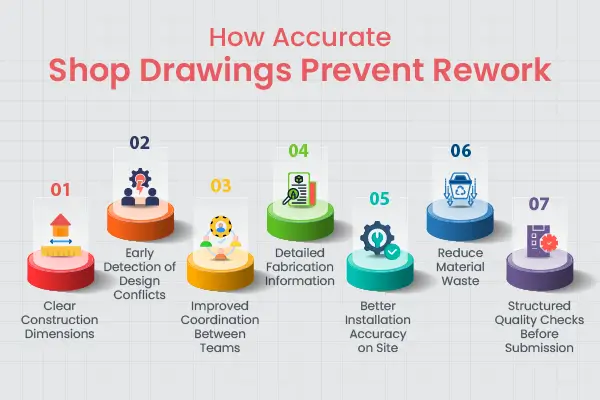
Accurate shop drawings offer smooth project execution, which offers clear instructions and precise measurements, which help the team avoid mistakes.
Here are critical points on how accurate shop drawings prevent rework and delays.
-
Clear Construction Dimensions
Professional shop drawings offer precise measurement, tolerance, and level. This ensures components are fabricated correctly, and accurate dimensions eliminate guesswork during installation and avoid costly adjustments on-site.
-
Early Detection of Design Conflicts
The professionals prepare shop drawings, which help to identify clashes between architectural, structural, and MEP components before construction begins. Detecting these issues early prevents costly corrections and schedule disruption later.
-
Improved Coordination Between Teams
Shop drawings act as bridges between architects, engineers, fabricators, and contractors. When you work with accurate drawings, coordination improves, and the risk of misinterpretation is minimized.
-
Detailed Fabrication Information
Experienced drafting teams offer connection details, assembly instructions, and material specifications. When fabrication drawings are precise, on-site modifications are reduced, which saves both time and labor.
-
Better Installation Accuracy on Site
When installers offer detailed and accurate shop drawings, they can complete the project on time. This eliminates the need for rework and helps to maintain the project timeline.
-
Reduce Material Waste
Precise detailing ensures materials are fabricated and installed to specifications. This helps to reduce incorrect fabrication and avoid material wastage, which saves both time and cost.
-
Structured Quality Checks Before Submission
A professional team follows an internal review process to verify accuracy before submission. This proactive quality control reduces errors before reaching the site and keeps the construction schedule proper.
Common Causes of Rework in Construction Projects
Even minor inaccuracies in shop drawings lead to on-site corrections. Identify the main cause of rework at the detailing stage to avoid reworking in construction projects.
The following are key points on the common causes of rework in construction projects.
-
Unclear Design Information
When design drawings lack a section, detailed dimension, or specification, shop drawings are created on assumption. These gaps result in fabrication or installation errors that need correction later.
-
Outdated Drawing Revision
Using the replaced design version for shop drawing preparation results in fabrication based on incorrect data, and version control failure leads to costly corrections.
-
Lack of Fabrication-Level Detailing
Shop drawings must include precise connection details, tolerance, and material specifications. Any insufficient detailing creates confusion at the manufacturing stage; without clarity, errors increase and modification is needed later.
-
Inadequate Review and Quality Checks
Rushed or fast submission without internal quality control increases the approval of comments, which delays the project schedule. A structured review process helps to identify variation without error to pass multiple stages during execution.
-
Frequent Design Changes During Construction
When design changes are frequent after construction has started, previous work may need modifications or replacements. This significantly increases the project cost and timelines.
Key Trends in Shop Drawing 2026
Explore key trends in shop drawings, which help teams improve quality, coordination, and timely project delivery.

-
Integration with BIM Technology
Shop drawings are created accurately using Building Information Modeling (BIM). This allows the team to visualize components in 3D, detect clashes, and improve coordination between structural and MEP systems.
-
Digital Collaboration and Cloud Sharing
Cloud-based platforms allow architects, engineers, and contractors to review and share shop drawings in real time. This speeds up the approval, improves communication, and reduces delays caused by outdated drawings.
-
Use of Advanced CAD and Drafting tools
Modern CAD software offers fast drafting and better visualization of complex structures. These drafting tools help professionals create highly accurate drawings while maintaining project standards.
-
Focus on Accuracy and Detailing
Project demands highly detailed shop drawings with quality materials, dimensions, and installation instructions, which help fabricators and contractors to complete work correctly the first time.
-
Standardization of Drawing Practices
Many organizations do not follow standardized templates and guidelines. These standardizations ensure consistency and help the team to quickly understand and review shop drawings.
Best Practices for High-Quality Shop Drawings
Best Practices for High-Quality Shop Drawings
Following are proven best practices to maintain consistency, accuracy, and faster approval for high-quality shop drawings.
-
Start with a Thorough Design Review
Carefully review architectural and engineering drawings before detailing. Also, understand the design intent early to reduce assumptions and prevent avoidable revisions later. It allows clarification requests to be raised before fabrication starts.
-
Ensure Accurate Dimension and Tolerance
Even a small dimensional error can create a major installation challenge on-site. It’s important for all measurements, structural designs, tolerances, and levels to be verified and clearly mentioned.
-
Follow Industry Standards and Guidelines
For precise shop drawings, it’s important to follow drafting practices, symbols, and format to make drawings easy for the project team to review and understand. Consistency also speeds up the approval process.
-
Provide Detailed Fabrication and Connection
High-quality shop drawings and fabrication drawings include weld details, material specifications, and assembly instructions. Clear detailing eliminates assumptions during manufacturing to ensure components are accurate and installed without delays.
-
Conduct Thorough Quality Checks
A detailed review process must be followed before submitting the shop’s drawings for approval. Quality checks help to identify incorrect dimensions, missing details, or inconsistencies.
Conclusion
Accurate shop drawings ensure smooth construction execution. To avoid costly mistakes and rework, it’s important to provide clear details, accurate dimensions, and proper coordination between teams. When fabricators and contractors work on well-prepared shop drawings, installation becomes faster, communication is smooth, and the project timeline stays on track.
Invest in high-quality shop drawings to reduce delays and deliver successful projects.
FAQs
Why are precise drawings important in construction projects?
Precise shop drawings offer clear dimensions, quality materials, and installation details. This helps fabricators and contractors to understand the design and execute it accurately, which reduces the chance of error and rework.
Can Gsource shop drawings help to detect design conflicts before construction?
Yes, well-prepared shop drawings detect conflicts between structural, architectural, and MEP elements during the review stage. Identifying these issues early to prevent costly on-site modification.
How do shop drawings help to reduce construction rework?
Gsource offers detailed shop drawings that clarify how each component is fabricated and installed. With accurate drawings, the work is completed correctly and minimizes the need for corrections.
How do accurate shop drawings improve project coordination?
Shop drawings are communication tools between architects, engineers, contractors, and fabricators. Clear drawings ensure all teams work with the same information and reduce conflicts.
Do accurate Gsource shop drawings help to speed up the project timelines?
Yes, when drawings are clear and detailed, approval happens faster, and installation is efficient. This helps to keep the construction schedule on track.
How do shop drawings support better fabrication accuracy?
Gsource precise shop drawings offer accurate measurements, materials, and assembly details. Fabricators produce components and reduce material waste and fabrication errors.
What role do shop drawings play in quality control?
Shop drawings are important for smooth fabrication and installation. The project team completes work with drawings to ensure they meet the design specifications and quality standards.
How does outsourcing shop drawing services help to avoid delays?
The professional Gsource drafting team specializes in preparing accurate and coordinated shop drawings. Their expertise and fast turnaround help projects to offer quality while meeting project schedules.
How do Gsource accurate shop drawings help to reduce construction delays?
Gsource offers highly detailed and coordinated shop drawings that provide clear fabrication and installation guidance to reduce construction delays.
Why should the construction team rely on Gsource for precise shop drawings?
Gsource combines experienced drafting professionals with advanced BIM and CAD tools to offer accurate and approval-ready shop drawings. This project team prevents errors, better coordinates, and reduces rework.
Pavan Mulik is the Vice President of Operations at Gsource Technologies, bringing extensive expertise in civil engineering, land surveying, and BIM. A true all-rounder, Pawan is passionate about architecture and excels in managing complex workflows while fostering dynamic team collaboration. His strategic approach ensures the successful execution of projects, no matter the scale. When he’s not overseeing operations, Pawan enjoys exploring new landscapes and architectural marvels, drawing inspiration from the world around him.
Read More