From Paper Map to Editable CAD: Benefits for Civil Engineers and Architects

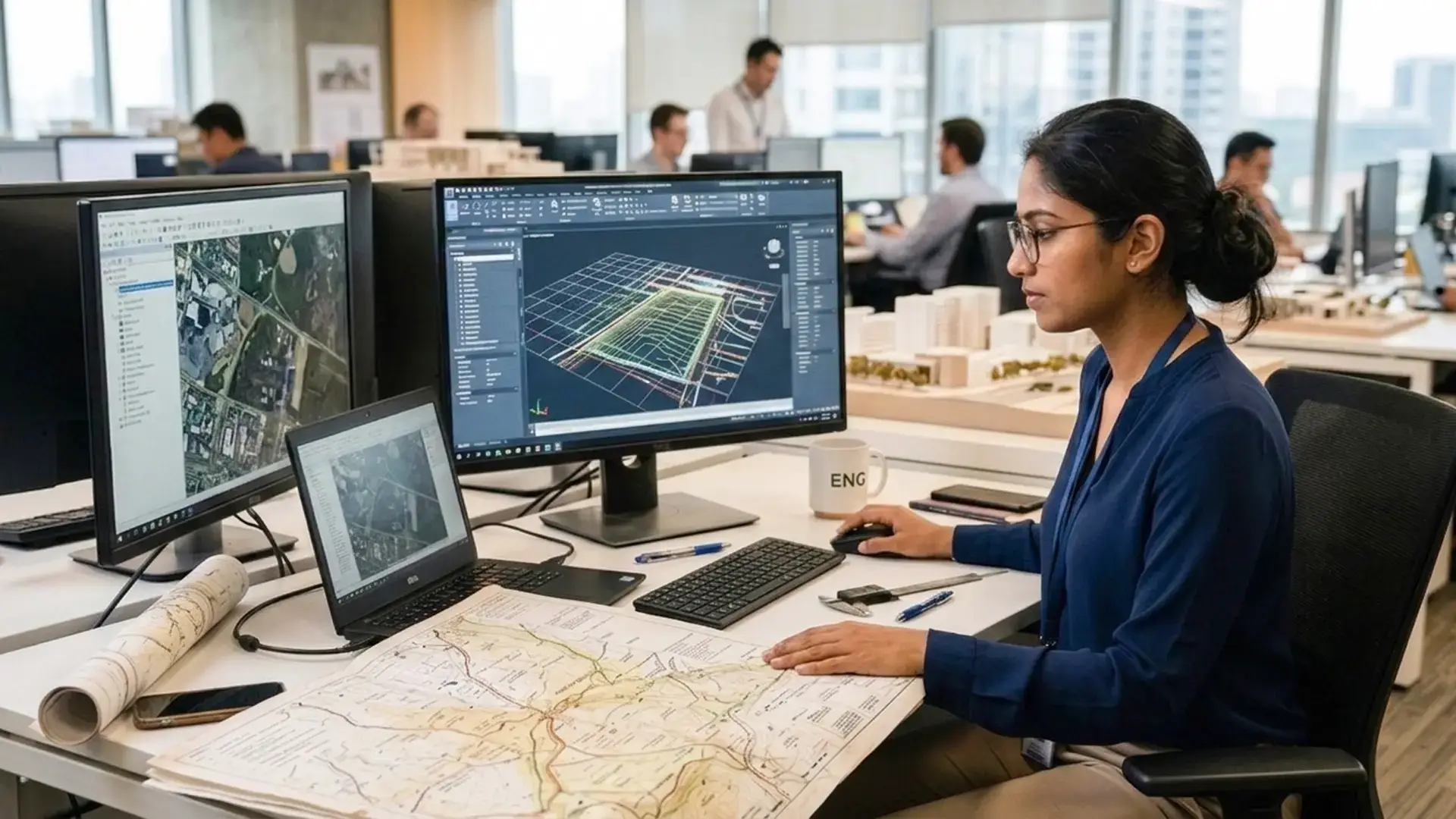
Table of Contents
What is Paper-to-CAD Conversion?
Why Civil Engineers and Architects Prioritize CAD Conversion
The Role of CAD in Future-Ready Design
Conclusion
FAQs
A paper map captures information, but an editable CAD file unlocks its full potential. Transforming from static drawings and handwritten notes to precise, scalable, and modified digital models. This transition from paper to CAD conversion is a performance upgrade for the entire design process.
For civil engineers and architects, editable CAD offers faster revisions, accurate measurements, and improved project coordination, which transforms legacy drawings into practical and data-driven design tools.
What is Paper-to-CAD Conversion?
Paper-to-CAD conversion is the process of converting traditional paper drawings into digital CAD files using specialized scanning and drafting techniques. Once these files are converted, they can be edited, scaled, and shared effortlessly, whether in PDF to CAD conversion, 2D to 3D models, etc.
This conversion is more than just a technical upgrade; it helps to keep your design data organized, secure, and ready for future use with tools such as Revit, AutoCAD, or SolidWorks. The conversion also enhances accuracy, as it reduces human error and maintains consistent scaling.
Why Civil Engineers and Architects Prioritize CAD Conversion
Every major project begins with a base map, but when the plan exists only on paper, progress slows. Converting it into editable CAD turns a static reference into a live design that engineers and architects can actually build on.
Here are the various benefits for civil engineers and architects when transforming paper into an editable CAD.
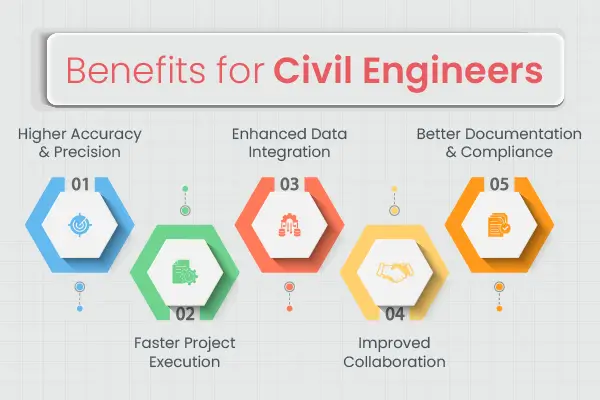
Benefits for Civil Engineers
- Higher Accuracy and Precision
CAD conversion eliminates distortion, scaling errors, and hand-drafting inconsistencies. This helps civil engineers to work with exact dimensions for design, analysis, and planning. It ensures contour lines, boundaries, and utility alignment with precise and accurate-based drawings. - Faster Project Execution
Editable CAD files allow engineers to quickly modify and speed up survey, layout planning, and design revision without redrawing the entire sheets. This significantly improves turnaround time for fast-track infrastructure projects. - Enhanced Data Integration
Editable CAD files can be directly integrated with BIM, GIS, topographic data, and structural design software. This also supports advanced analysis like drainage design, grading, and utility planning to make informed decisions. - Improved Collaboration
Multiple teams can work simultaneously on shared digital drawings, which are ready to review, markup, and access for version control disciplines. Cloud-based access enables real-time updates and coordinated revision, which reduces communication gaps. - Better Documentation and Compliance
Digital drawings are easy to archive, update, and format for regulatory submission. This reduces the risk of outdated or inconsistent design information, and standardized templates ensure adherence to industry and compliance requirements.
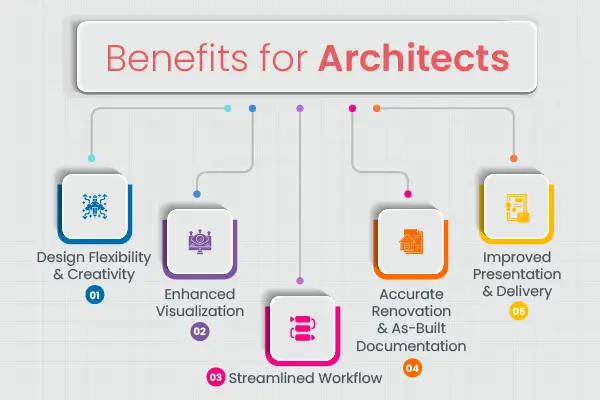
Benefits for Architects
- Design Flexibility and Creativity
Editable CAD formats allow architects to explore multiple design options quickly, as it is easy to modify spaces, proportions, and layouts without redrafting. This flexibility ensures faster and iterative design during client presentations. - Enhanced Visualization
CAD files can be used to create 3D models, renderings, and walkthroughs, which help clients and stakeholders better understand the proposed concepts. An accurate digital base improves the quality of views and material representation. - Streamlined Workflow
Simplify coordination with the MEP, structural, and interior design team to reduce time spent scanning, tracing, or manually converting old drawings. Layered CAD structure simplifies file sharing and cross-discipline and improves project timelines. - Accurate Renovation and As-Built Documentation
CAD drawings offer clean and professional output, which is suitable for approval, presentations, and construction. This helps architects with consistent line weights, layers, and formatting to improve clarity.
CAD Conversion Role in Future-Ready Design
Following are key roles of CAD conversion for future-ready design that builds a reliable foundation for automation and digital twins.
- Enable Digital Transformation
CAD conversion transforms paper drawings and PDFs into intelligent digital files. This creates a structured foundation for modern workflows, cloud collaboration, and integrated project delivery. - Improves Design Accuracy
Convert legacy drawings into precise CAD format, which reduces manual errors and misinterpretations. Accurate geometry and verified dimensions support reliable downstream design and construction processes. - Support BIM Integration
Clean CAD files act as base input for BIM modeling platforms like Navisworks and Autodesk Revit. This ensures smooth model creation, clash detection, and data-driven coordination. - Enhance Collaboration Across Teams
Standardized CAD drawings allow engineers, architects, and contractors to work on unified files. This improves communication, reduces RFIs, and leads to better decision-making. - Facilitate Scalability and Upgrades
Digitized CAD data can easily be updated, revised, or repurposed for expansion and retrofits. This flexibility ensures that designs are adaptable to future project demands. - Optimize Facility Management
Accurate CAD drawings offer reliable as-built documentation. These files support maintenance planning, renovation, and lifecycle management long after project completion.
Conclusion
CAD conversion offers numerous benefits to civil engineers and architectural firms that lie beyond file conversion. This service enhances the accuracy of projects, better collaboration, boosts productivity, and reduces costs, which helps them stay competitive in a fast-moving industry.
FAQs
What does converting a paper map to an editable CAD include?
It involves converting physical maps into structured CAD drawings with accurate layers, linework, and dimensions. The result is a fully editable file that can be modified, measured, and integrated into the design workflow.
How does CAD conversion improve accuracy for civil engineers?
Editable CAD files allow engineers to verify distance, contours, and boundaries precisely.
This reduces manual calculation errors and improves the reliability of site planning.
Why is CAD conversion important for architects working on redevelopment projects?
Convert paper maps into CAD to ensure accurate base plans, which make it easy to redesign space while maintaining alignment with existing conditions
How does Gsource ensure quality in paper-to-CAD conversion projects?
Gsource follows structured layer standards, scaling verification, and multi-level quality checks to ensure quality.
Can CAD conversion help with the regulatory approvals?
Yes, clean and well-layered CAD drawings simplify submissions to local authorities. Clear documentation improves review efficiency and reduces revision due to unclear drawings.
How does CAD conversion support better collaboration between teams?
Digital CAD files can easily be shared across disciplines in standardized formats. This improves coordination between civil engineers, architects, and contractors to minimize rework.
What are the long-term cost benefits of converting maps to CAD?
Editable CAD files reduce the need for repeated redrafting and manual correction. This lowers project costs by minimizing design errors, delays, and on-site modifications.
Why do civil engineers and architects choose Gsource for CAD conversion?
Gsource delivers precise, standardized CAD outputs tailored to project requirements. Their team focuses on fast turnaround, accuracy, and compatibility with design and BIM workflow.
How does converting paper maps to editable CAD improve project accuracy?
Editable CAD files allow precise scaling, measurement, and accurate dimensioning. This reduces manual calculation errors and ensures better alignment between design intent and on-site execution.
Can an editable CAD file support future modification and expansion?
Yes, unlike paper maps, CAD files can easily be updated, revised, or expanded without redrawing from scratch. This flexibility is valuable for phased development and infrastructure upgrades.
Pavan Mulik is the Vice President of Operations at Gsource Technologies, bringing extensive expertise in civil engineering, land surveying, and BIM. A true all-rounder, Pawan is passionate about architecture and excels in managing complex workflows while fostering dynamic team collaboration. His strategic approach ensures the successful execution of projects, no matter the scale. When he’s not overseeing operations, Pawan enjoys exploring new landscapes and architectural marvels, drawing inspiration from the world around him.
Read More